Navigating narrow stairs in Fitzrovia: large item tips
Posted on 10/06/2026
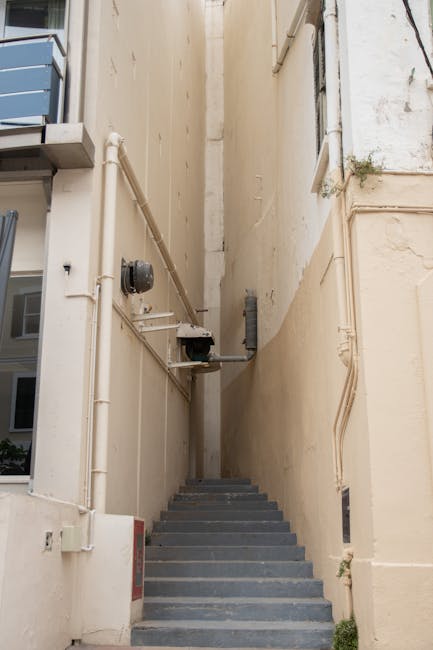
![A narrow outdoor street in Fitzrovia viewed from street level, showing a steep set of stone stairs with a metal handrail on each side, leading upward between two multi-storey buildings. On the stairs, several people are seen carrying or walking past large items covered with blankets and plastic wrapping, possibly during a home relocation or moving process. Some smaller cardboard boxes and packing materials are visible on the steps. To the left, the building features a mix of brick and white paneled facades, while to the right, the building has a white exterior with ornate architectural details and a sign for 'The Coal Hole' pub. An umbrella is placed on the ground near the base of the stairs, and the surrounding environment appears wet, reflecting recent rain, with overcast skies above. The scene illustrates a typical move involving furniture transport through a narrow, urban Fitzrovia street, supported by [COMPANY_NAME]'s removals services.](/pub/blogphoto/navigating-narrow-stairs-in-fitzrovia-large-item-tips1.jpg)
If you live or move in Fitzrovia, you probably already know the drill: elegant older buildings, compact hallways, and staircases that seem to turn sharply just when you need them not to. Navigating narrow stairs in Fitzrovia: large item tips is not just about muscle. It is about planning, measuring, protecting your belongings, and avoiding a very awkward moment halfway up the landing. Whether you are moving a sofa, mattress, wardrobe, piano, or white goods, the real challenge is often the staircase itself, not the item.
This guide walks you through the practical side of moving bulky items through tight stairwells, with a Fitzrovia-specific mindset. You will find sensible preparation steps, common pitfalls, and realistic options for when an item simply will not cooperate. Truth be told, that happens more often than people expect.
Contents
- Why it matters in Fitzrovia
- How the process works
- Key benefits and practical advantages
- Who this is for
- Step-by-step guidance
- Expert tips for better results
- Common mistakes to avoid
- Tools, resources and recommendations
- Law, compliance, standards, or best practice
- Options, methods, or comparison table
- Case study or real-world example
- Practical checklist
- Conclusion
- Frequently asked questions
Why Navigating narrow stairs in Fitzrovia: large item tips Matters
Fitzrovia homes and workspaces often combine character with constraint. That can mean split-level flats, narrow turns, shallow stair treads, low ceilings, and railings that eat into usable space. On paper, a sofa may look manageable. In real life, it can catch on a banister, scrape a wall, or stall on the landing because the angle is wrong by just a few centimetres.
Why does this matter so much? Because forcing a large item through a tight staircase creates avoidable risks: damage to the item, scuffs to the property, strain injuries, delays, and a fair bit of stress. If you are managing a move in a top-floor flat, this becomes even more important. Stair access can determine whether a move is straightforward or a logistical puzzle.
There is also the local reality of London living. Many Fitzrovia properties were not designed around modern sectionals, king mattresses, or oversized wardrobes. The good news is that with the right approach, most moves become more predictable. And predictable is lovely on moving day.
If you are planning a broader relocation, it can help to read a few related guides first, such as packing smarter before moving day and keeping the move calm and organised. They fit neatly with the staircase challenge because good packing and good planning reduce the pressure on every lift and turn.
How Navigating narrow stairs in Fitzrovia: large item tips Works
At a practical level, the process is about matching the item to the route. That sounds obvious, but people often reverse it. They carry the item first and only then discover the route is too tight. Better to start with the stairs, landings, door widths, ceiling height, and any awkward bends.
The basic idea is simple: measure, protect, reduce weight where possible, and choose the safest angle of travel. For some items, a straight carry with two people is enough. For others, you may need to tilt, rotate, remove legs, or take the item apart. With very large or fragile pieces, specialist handling may be the sensible option.
In many Fitzrovia buildings, the key limiting factor is not floor space but manoeuvring space. A dresser might technically fit in the stairwell, but not while turning onto the first landing. That is where planning earns its keep.
A useful mental model is this: every staircase move has three variables - size, shape, and support. Size is the item itself. Shape is the route. Support is the people, tools, and protection you bring with you. Miss one, and the whole thing gets fiddly fast.
Key Benefits and Practical Advantages
Doing this properly brings more than just peace of mind. It often saves time, money, and a bit of pride too. Nobody enjoys getting stuck with a mattress in a stairwell while neighbours politely pretend not to watch.
- Less risk of damage: careful angling and padding reduce knocks, tears, and scrapes.
- Lower chance of injury: proper lifting and route planning reduce strain on backs, shoulders, and hands.
- Fewer delays: a measured plan prevents mid-move surprises.
- Better use of space: stripping items down, rotating them correctly, or using the right equipment often makes a previously impossible move workable.
- More confidence: once you know the route and the item size, the job feels far less daunting.
There is another, less obvious benefit: protecting the building. In Fitzrovia, many homes are rental properties or older conversions with narrow plaster walls and delicate railings. A careful move helps maintain a good relationship with landlords, neighbours, and managing agents. That matters more than people admit.
Who This Is For and When It Makes Sense
This advice is for anyone moving large or awkward items through tight internal access in Fitzrovia. That includes renters, homeowners, students in compact flats, landlords clearing a property, and businesses shifting furniture through old staircases in converted offices.
It is especially relevant if you are dealing with:
- sofas and corner sofas
- beds and mattresses
- wardrobes and bookcases
- fridges, freezers, and washing machines
- desks, filing cabinets, and office chairs with bulk
- pianos or other heavy, delicate items
It also makes sense when access is awkward for reasons beyond stairs: tight front doors, shared entrances, limited parking, or a building that needs items carried in at an odd time. If that is your situation, support from a service like flat removals in Fitzrovia or man and van support can be a practical fit, especially when the access issue is as important as the item itself.
For students and smaller households, the challenge often comes down to one or two bulky pieces. For a larger household move, the issue becomes cumulative. One awkward item is annoying. Six awkward items, one after another, can turn the day into a slog.
Step-by-Step Guidance
Let's make this practical. Here is a sensible step-by-step approach that works well for narrow staircases and large items in Fitzrovia.
- Measure everything first. Check item height, width, and depth. Then measure stair width, landing depth, door frames, and ceiling clearance. Do not forget radiators and bannisters. They like to be part of the problem.
- Inspect the route in person. Photos help, but walking the route is better. Look for corners, low light, narrow points, and any carpet or flooring that could slip.
- Decide whether the item needs dismantling. Remove legs, doors, cushions, shelves, or mattress bases where possible. A wardrobe without doors may go from impossible to manageable.
- Clear the staircase and hallways. Move shoes, bags, bins, umbrellas, and anything else that turns the route into an obstacle course.
- Protect walls and corners. Use blankets, corner guards, or temporary padding. Even a careful lift can brush a wall when you turn.
- Assign roles. One person should lead and communicate. Another should support from the rear. If the item is heavy or bulky, add a third person rather than pretending two will somehow be fine.
- Lift with control, not speed. Slow is usually smoother. Pause on landings. Reset your grip. Breathe, honestly.
- Use the right equipment. Straps, dollies, sliders, and blankets can reduce friction and improve control. The right tool makes a lot of difference.
- Plan the exit and the entrance. Sometimes the hardest point is not the stairs but the transition from hallway to stairwell or from stairwell to room.
- Know when to stop. If the item jams, pivots badly, or starts to strain the team, stop and reassess. Forcing it usually makes things worse.
For especially heavy items, the principle of controlled movement matters even more. A practical read like how better lifting movement helps efficiency and handling heavy lifting safely can be useful background if you want to understand the body mechanics behind the advice.
Expert Tips for Better Results
A few field-tested habits make narrow-stair moves much smoother. They are small things, but small things matter when space is tight.
1. Measure the awkward bit, not just the obvious bit
People tend to measure the straight run of stairs and miss the landing turn. That is usually where trouble starts. Measure the tightest corner, the narrowest point, and the point where the item needs to pivot.
2. Remove anything that sticks out
Handles, feet, shelves, and decorative trim can create needless snag points. If they can be safely removed, remove them. A sofa without feet often moves better than you think.
3. Protect the item before you protect the route
It sounds backwards, but if the item is fragile or valuable, wrap it properly first. A move is not improved by arriving quickly with a cracked edge or torn upholstery.
4. Work in daylight if you can
Fitzrovia stairwells can be dim. Natural light helps you judge angles and spot friction points. If you are working early morning or later in the evening, add extra lighting. Simple, but useful.
5. Use verbal cues
One person should call the movement: "lift," "turn," "pause," "down." It sounds a bit formal at first, but it prevents the classic mismatch where one person shifts and the other is still gripping. A tiny delay can be the difference between smooth and messy.
If you are trying to decide whether it is worth using professional help, browsing the services overview or furniture removal options in Fitzrovia can clarify what level of support fits the job.
And a small human truth: the calmer the team, the easier the lift. Anxiety spreads quickly on stairs. So does overconfidence. Neither is ideal.
Common Mistakes to Avoid
Most staircase mishaps are completely preventable. They come from rushing, guessing, or assuming that "it'll probably fit." Probably is not a plan.
- Not measuring the route properly. Guessing stair width is a classic mistake.
- Forgetting the turn on the landing. Many items fit straight up but fail at the bend.
- Trying to move too much at once. One large item and a bag of extras is rarely wise.
- Using too few people. Three steady hands often beat two strained ones.
- Skipping protection. Unprotected walls, floors, and corners can take a beating.
- Moving without a clear exit plan. Especially with larger items, you need to know where the item will pivot and where it will rest if you pause.
- Ignoring fatigue. Tired people make sloppy lifts. Sloppy lifts cause damage.
One of the biggest errors is treating every bulky item the same. A mattress, a wardrobe, and a piano are all large, but they behave very differently on stairs. That is why specialist advice matters. If you are dealing with a piano, for example, piano removals in Fitzrovia is a much better fit than generic lifting advice alone.
Another overlooked issue is disposal. If an item cannot safely be moved or no longer needs to be kept, think ahead about its removal. The guide on bulky waste solutions at end of tenancy is relevant when an old item is getting in the way of the move rather than being part of it.
Tools, Resources and Recommendations
You do not need a warehouse full of kit, but a few tools can make awkward stairs a lot easier to manage. Choose equipment based on the item, not on habit.
| Tool or resource | Best for | Why it helps |
|---|---|---|
| Furniture blankets | Sofas, tables, cabinets | Protects edges and reduces scuffs |
| Removal straps | Heavy or long items | Improves control and weight distribution |
| Slider pads | Short floor moves before stairs | Reduces friction on hard floors or carpet |
| Corner protectors | Narrow stairwells and sharp turns | Helps safeguard walls and paintwork |
| Disassembly tools | Flat-pack and modular furniture | Makes bulky items smaller and easier to steer |
For packing support, the page on packing and boxes in Fitzrovia can help you decide how to prepare smaller items so the bigger ones are not surrounded by loose clutter. And if you need temporary holding space while you figure out a difficult access problem, storage in Fitzrovia may be the practical pause button you need.
If you are the kind of person who wants to keep the overall move calm rather than chaotic, it may also help to revisit stress-free move planning. It is not glamorous reading, but it does save headaches.
Law, Compliance, Standards, or Best Practice
With moving and lifting, the biggest concern is usually safety and property care rather than a complex legal process. Still, there are sensible UK best-practice expectations worth keeping in mind.
First, avoid unsafe manual handling. If an item is too heavy, too awkward, or too unstable for the team available, the responsible move is to stop and reassess. Overreaching is how people end up with strains, dropped items, and damaged walls. Not worth it.
Second, if you are hiring help, it is sensible to choose a provider that treats insurance, safety, and handling procedures seriously. Reading a company's insurance and safety information and health and safety policy can give useful reassurance before moving day.
Third, if you are in a shared building or rental property, be considerate about timing, noise, lift use, and protecting communal areas. Small courtesies matter a lot in a place like Fitzrovia where entrances can be busy and neighbours are close by. Keeping shared areas clean and intact is simply good practice.
If your move also includes waste removal or item disposal, it is worth thinking about recycling and responsible handling. The topic of recycling and sustainability fits naturally here, especially for furniture or appliances that no longer have a useful life.
Options, Methods, or Comparison Table
Different items call for different approaches. A quick comparison can help you decide what to do before the first lift begins.
| Method | Best used when | Pros | Trade-offs |
|---|---|---|---|
| Carry as-is | Item is manageable and the stairwell is wide enough | Fast, simple, less prep | Risky if turns are tight or weight is uneven |
| Partial dismantling | Furniture has removable parts or legs | Improves fit and manoeuvrability | Takes time and needs careful reassembly |
| Two-person controlled move | Medium-large item with clear stairs | Good balance of control and efficiency | Still limited by awkward bends or weight |
| Specialist removal support | Heavy, fragile, or unusually shaped item | Safer, more reliable, less stress | Costs more than doing it yourself |
| Temporary storage then move later | Access is too tight or timing is awkward | Reduces rush and planning pressure | Requires extra coordination |
For many Fitzrovia moves, the smartest answer is a mix of methods. For example, you might dismantle a bed frame, carry the mattress separately, and store a bulky side unit until the route is cleared. If that sounds familiar, the article on moving beds and mattresses smoothly is a useful companion piece.
Case Study or Real-World Example
A recent-style example: a couple moving out of a third-floor Fitzrovia flat had a two-seat sofa, a king mattress, and a tall shelving unit to get down a staircase with a tight 90-degree turn. At first glance, the sofa looked like the biggest headache. In the end, the shelving unit caused more trouble because it had awkward depth and no removable sections.
Here is what worked:
- they measured the stairwell and landing before moving day
- they removed the sofa feet and wrapped the arms
- they emptied the shelving unit completely to reduce weight
- they carried the mattress vertically with careful support
- they paused on the landing rather than forcing the turn
The move was not lightning-fast, but it was controlled. No damage to the paintwork, no panicked shuffling, no awkward silence halfway down the staircase. The biggest lesson was simple: the item that looks the most obvious problem is not always the one that causes it.
In a different situation, a homeowner chose to use same-day removals in Fitzrovia after realising that a last-minute change meant several bulky items needed shifting quickly. That kind of flexibility can be useful when access problems and timing problems arrive together, as they sometimes do.
![A narrow outdoor street in Fitzrovia viewed from street level, showing a steep set of stone stairs with a metal handrail on each side, leading upward between two multi-storey buildings. On the stairs, several people are seen carrying or walking past large items covered with blankets and plastic wrapping, possibly during a home relocation or moving process. Some smaller cardboard boxes and packing materials are visible on the steps. To the left, the building features a mix of brick and white paneled facades, while to the right, the building has a white exterior with ornate architectural details and a sign for 'The Coal Hole' pub. An umbrella is placed on the ground near the base of the stairs, and the surrounding environment appears wet, reflecting recent rain, with overcast skies above. The scene illustrates a typical move involving furniture transport through a narrow, urban Fitzrovia street, supported by [COMPANY_NAME]'s removals services.](/pub/blogphoto/navigating-narrow-stairs-in-fitzrovia-large-item-tips3.jpg)
Practical Checklist
Use this checklist before moving any large item down narrow stairs in Fitzrovia.
- Measure the item and the full route, including the landing turn.
- Check whether the item can be dismantled safely.
- Empty drawers, shelves, and compartments.
- Protect walls, bannisters, floors, and corners.
- Decide how many people are needed.
- Assign one person to lead communication.
- Prepare blankets, straps, or sliders if needed.
- Clear the path before lifting.
- Wear suitable footwear with grip.
- Plan where to pause if the item needs resetting.
- Have a backup plan if the item will not fit.
- Book specialist help if the item is valuable, heavy, or awkward.
One simple tip: if you feel rushed, slow the job down by five minutes. Those five minutes often save fifty. Little pause, big difference.
Get a free quote today and see how much you can save.
Conclusion
Navigating narrow stairs in Fitzrovia: large item tips are really about making good decisions before the lifting starts. Measure carefully, clear the route, reduce unnecessary bulk, and do not be shy about asking for help when the item or staircase calls for it. That is not overcautious. It is sensible.
The best moves feel almost boring in hindsight. No panic, no scraping, no last-minute improvising on a stair landing with a wardrobe wedged at a funny angle. Just a steady, organised job that gets done properly. And in Fitzrovia, where space can be tight and the buildings have their own quirks, that calm approach matters a lot.
If you are preparing a move, a furniture shift, or a difficult item carry, the next sensible step is to assess the route honestly and choose the safest method for the item in front of you. A little preparation goes a long way. Really it does.